Someone you know has left or is planning to leave. 1,000 Ways to Japa speaks to real people and explores the endless reasons and paths they take to japa.
When Faith decided she wanted Canadian Permanent Residency (PR), she booked her English test and weeks after she had her Invitation to Apply.
In this story, she shares how she skipped the agents entirely, the exact strategy that got her PR in under four months, and the one thing she’d tell anyone drowning in online migration advice.
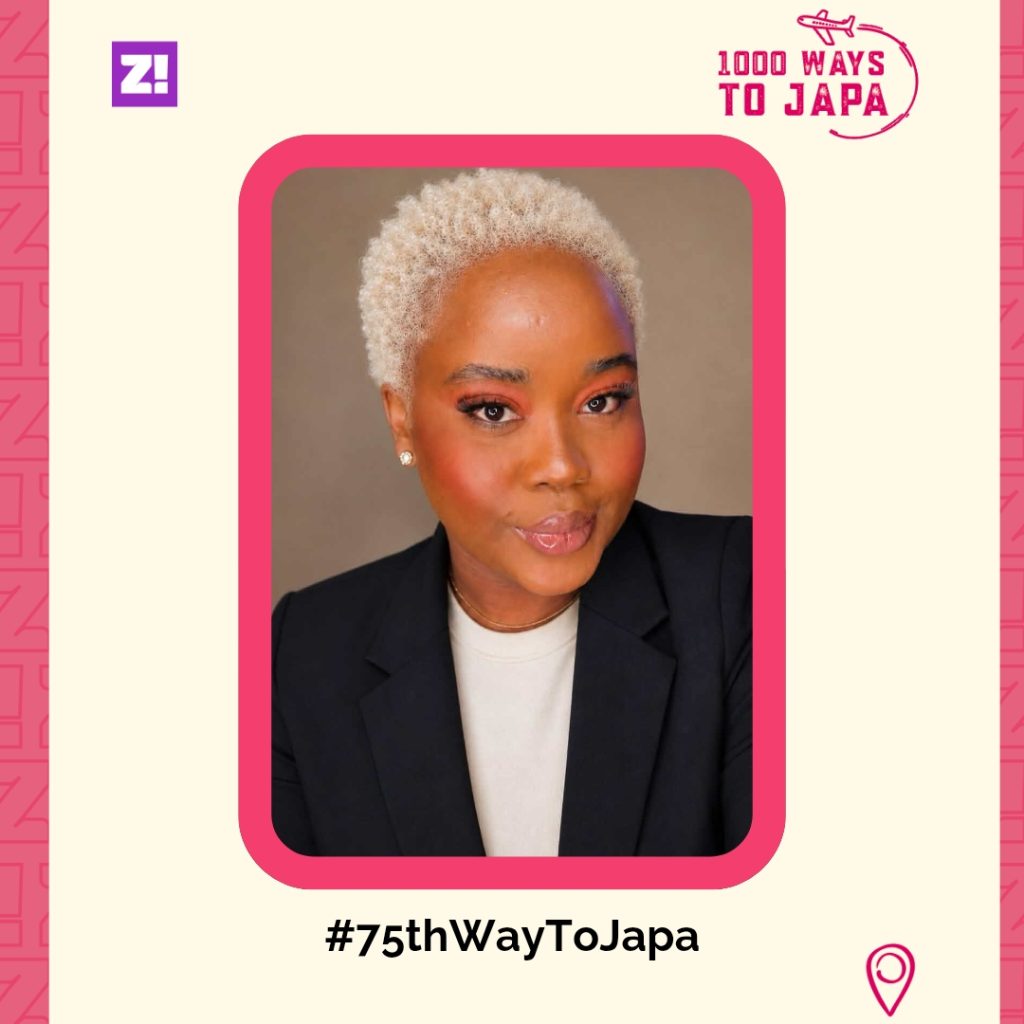
Where do you currently live, and when did you first leave Nigeria?
Well, that’s a pretty layered question. I left Nigeria for Dubai in November 2020. I later moved to the UK in December 2022 for my master’s, and I got my Canadian permanent residency this year. I travelled to Canada on April 2. I’m currently splitting time between the UK and Canada, but I’ll be moving to Canada for good pretty soon.
Wow! That’s a lot. Before we get into Dubai, take me back to what life was like for you in Nigeria
Way before any of this, I wrote my General Certificate Exam (GCE) at 13. I think I was the youngest person I knew to write it at the time. I then finished secondary school at 14.
I was too young to be admitted to a Nigerian university, so I completed a French-language diploma at the Nigerian French Language Village to buy time. But when I tried to get into a Nigerian university afterwards, I ran into the usual admissions frustrations; one school’s deadline closed the day I submitted, and another just mishandled my application without telling me what else I needed to do.
At that point, I decided I wasn’t going to wait around anymore. Looking back, I genuinely believe it was God at work. When He wants to push you somewhere, He just lets things happen the way they do, so you end up moving in that direction.
My parents couldn’t afford to send me to school in the United Kingdom (UK) or the United States (US) for school, so I found out about universities in the Benin Republic through a friend, applied entirely on my own and didn’t tell my parents until I had gotten in. My mum funded it after they found out.
I graduated at 18 and returned to Nigeria to serve in the National Youth Service Corps (NYSC).
That’s really interesting. So, what were you doing before you left for Dubai?
After NYSC, I moved to Abuja to work as a restaurant manager. I specifically asked to be posted there instead of Port Harcourt because I wanted to be somewhere I didn’t have too many ties, so I’d be forced to figure things out on my own.
That job ended up being huge for me. It’s where I did restaurant consulting, operations management, sales, and recipe compliance, and it’s honestly where my love for hospitality and food businesses really started.
After a while, I moved to Lagos and entered the oil and gas industry as a business development executive. I was earning well, living comfortably on the island, and meeting great people. But I got bored fairly quickly, which happens to me a lot. I loved my boss and the company, but I realised I was chasing someone else’s dream, not mine. My dream was to eventually own a chain of contemporary restaurants, and I wasn’t going to get there sitting in oil and gas.
So what took you to Dubai?
I applied for a hospitality master’s in Spain first and got a partial scholarship, but I realised the school was far from town and I wouldn’t be able to work while I studied.
Around the same time, Dubai was preparing to host , and it was the biggest name in tourism. So I thought, why not go get hospitality experience there first, build some bragging rights, and then apply for my master’s after?
How did you actually get into Dubai? What was the visa process?
I applied for a visit visa. I found an immigration company online, and they handled my visa application. What I submitted was fairly straightforward: bank statements, proof of funds, passport details, and information about my job at the time.
I actually got the visa and bought my flight before COVID hit, so my trip was delayed. I flew out of Abuja to see my parents first, and that’s when the lockdown happened. I got stuck in Port Harcourt with just a handbag while all my luggage was still in Abuja. Dubai’s borders eventually reopened, and I landed in November 2020.
The visit visa was renewable, so you could just keep topping it up, no physical stamp needed except at the airport. The important thing was staying legal in the country. Once I found a job, the company would sponsor a full work visa.
What was life in Dubai like for you?
The first three months were tough, especially because I wasn’t working.
I had to set a photo of Dubai’s skyscrapers as my phone’s screensaver, as a reminder every time I unlocked my phone that God’s promises for me were true and that I was going to make it happen.
I started selling Nigerian food to other immigrants I met around, going from shop to shop with a little trolley. Eventually, I landed a restaurant job doing customer service and online orders.
Wait! You actually turned down a work visa sponsorship?
Yes! The restaurant wanted to sponsor my visa, but that came with a two-year commitment to the company, and I just knew that wasn’t what I was meant to do. I kept telling myself, “God, this is not what you’ve brought me to do.”
My friends thought I had gone mad. People were literally praying for the kind of opportunity I was turning down. But I stuck to my decision. Not long after, a friend connected me to a high-end sales role selling skincare with gold and diamond infusions, plus non-surgical facelifts. That job changed everything. I was earning up to 15 times what I made at the restaurant job.
Love that for you. So how did the UK come into the picture?
At some point, I wanted more immigration stability, so I looked into Canada. That’s when I found out (WES) no longer evaluates degrees from most schools in Benin Republic, and my first degree was from a school there. Instead of fighting that, I decided to do a master’s in the UK, since a fresh, recognised qualification would help me build a stronger case for Canada afterwards.
I made the decision, applied three days later, got admitted three days after, and paid my full fees within a week. I entered the UK in December 2022, and my course started in January 2023.
What was life like while you were studying?
I worked part-time in education as a teaching assistant in a special-needs school and as a support worker in healthcare. That healthcare experience ended up mattering a lot later; it contributed to my Express Entry eligibility.
I was very intentional about never applying for a job with a Certificate of Sponsorship (CoS), even when people around me were chasing those roles, because I didn’t want to start conditioning myself to stay in the UK long-term.
Nice, now let’s get into the Canada process. Walk me through it.
In August 2025, I was in church, and my pastor was preaching about not procrastinating on the things you’ve set your mind to do. That same day, I booked my International English Language Testing System (IELTS) exam, exactly one month before the test date, and I hadn’t studied a single day yet.
Between a full-time job, running my own business, and recovering from surgery two months prior, I didn’t start proper studying until about two weeks before the exam and didn’t get serious until three or four days before.
Oh wow! Did that affect your results eventually?
I got a perfect score. I sat for the exam on September 28, and the next day at church, I asked God to change that score if it wasn’t what I needed; some people would call it delusion; I call it faith.
When my results came in the next day, I screamed in the Uber I was in. I maxed out every section. The moment my score came in, my Comprehensive Ranking System (CRS) score shot up. I entered the Express Entry pool the very next day, September 30, created my profile with all my experience, and got my Invitation to Apply exactly (ITA) two weeks later, on October 15.
What documents and timeline did the PR application involve?
I submitted my application 19 days after getting my ITA, on November 3, and they confirmed receipt within an hour. I did my medicals as part of the process. One thing that mattered a lot was my letter of explanation; I ended up writing about 16 pages, explaining everything clearly, including explaining my proof of funds.
My money was spread across a few different accounts, including some newer banks so I moved everything into my HSBC account and included proof of that transfer to show the funds were genuinely mine. You don’t need six consecutive months of savings sitting untouched,you just need to show the funds are legitimately available to you.
It took exactly four months to get from submission to approval. I got my PR confirmation, sent in my passport, and got it back with my PR stamped in about a week. I landed in Canada on April 2.
What did the whole process actually cost you?
From start to finish — IELTS, Express Entry, the application itself — I spent under £1,800 total for the entire process. I know people who’ve been charged £3,000 by agents for the same process.
You’re clearly not a fan of agents.
Not at all, specifically for this process. I did everything myself — no agent, ever, for Canada. It took a lot of research, filtering out wrong information, outdated advice, and other people’s bad experiences. I now run to help people build their own Express Entry profiles, plus an IELTS strategy ebook and boot camp classes with mock tests.
There isn’t a one-size-fits-all pathway; some people qualify through the Canadian Experience Class, some through a Provincial Nominee Program, and others because they have family in a specific province. It really depends on your individual profile.
The two biggest factors for PR success are a high CRS score and working in an in-demand job category. Your CRS score comes down to age, academic credentials, and your language test results, which is why I stress the IELTS so much. I didn’t need French for my application; my score was already high enough from my healthcare experience and academic background.
What’s life actually been like so far, between the UK and Canada?
The UK was a big culture shock after Dubai. In Dubai, everything was delivered to your door; I once asked a friend in Sheffield to have a painkiller delivered to me, and he looked at me like I was mad. In the UK, I had to get used to paying council tax, doing things myself, and a much colder social culture generally. I was low for the first four to six months after moving.
Canada, so far, feels like the closest thing to Dubai I’ve experienced — modern buildings, condos with pools and gyms, and a genuinely warmer culture. When I arrived at the airport, a stranger helped me lift my suitcase onto the train without me asking. Someone even walked me to my platform. That kind of thing just doesn’t happen in the UK, in my experience.
What’s your favourite thing about Canada?
How multicultural and warm it feels. People seem genuinely happier; restaurant staff, strangers on the street, everyone. When I joined a Toronto neighbourhood Facebook group, over a hundred people responded with tips on where to live, whether I had a car, walkability, all of it. It doesn’t feel like survival mode the way it does in the UK.
On a scale of one to ten, how would you rate life in the UK and life in Canada?
UK — I’d say four out of ten, and I’ll be honest that I’m biased. I’ve tasted a more disposable-income, higher-quality lifestyle in Dubai, so the UK will always feel like survival mode to me by comparison. People here eat and sleep so they can work, instead of working so they can live.
Canada — six or seven out of ten so far, based on visits rather than living there long-term. It feels multicultural, less toxic, and people are far more willing to help each other out.
Any advice for someone considering this exact route?
You can do whatever you set your mind to; that’s actually a tattoo I have. Don’t let other people’s negative experiences become your excuse before you’ve even tried.
The Canada PR process isn’t as complicated as people make it seem. Read, research, use the resources available to you, and only pay for guidance if you genuinely need pointers, not because you’re too scared to try.
Any mistakes you’d tell people to avoid?
Worrying too much during the waiting period. I paused parts of my own life while waiting for my application to come back, and it left me overwhelmed, almost depressed. What eventually got me through it was telling myself that everything was in God’s hands.
I submitted a clean application, checked everything, and there was nothing left to do but trust the process. Once I actually settled into that and moved on with my life, I got my PR two days later.
This has been such a good conversation. Anything you want to add?
Just that everyone’s timeline and pathway is different. Don’t compare your process to anyone else’s. Focus on your own situation and what’s actually available to you.
Want to share your japa story? Please reach out to me here.
°Õ³ó±ðÌý is returning on August 22, 2026, in Lagos! Come learn from finance experts and industry leaders, and partake in unfiltered conversations about building wealth and diversifying your income stream in a country like Nigeria. Real stories, expert advice you can actually use, and a community ready to build wealth together. .