

Abuja is underwater again. Naturally, Nigerians have one question: Minister Wike, what is going on?
On Saturday, August 15, heavy rainfall parts of Wuse 2, Gudu, and Lokogoma in the Federal Capital Territory (FCT), Abuja, into giant overflowing bathtubs.
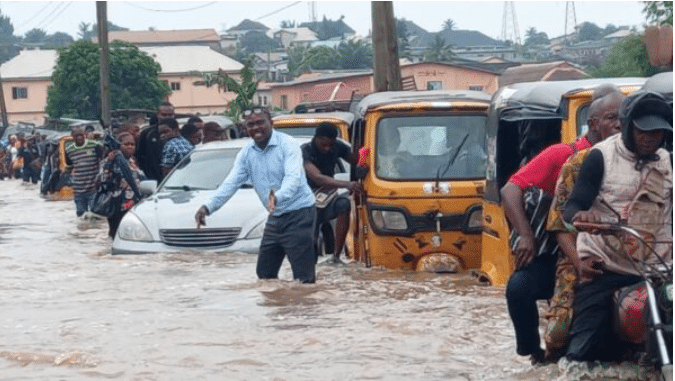
The flooding affected roads and neighbourhoods, leaving residents and motorists . The thing is, this year’s flooding didn’t exactly arrive without notice.
The Nigeria Meteorological Agency had warned about the risk of flooding during the 2026 rainy season, while the Nigeria Hydrological Services Agency had already us a preview of what the year would look like. So Abuja wasn’t caught completely unaware.
So, why is Abuja flooded, then?
Well, it’s a bit complicated. But we’re here to give you the rundown of the whole shebang.
First, Abuja is supposed to be . It wasn’t designed to be just another city where you pour concrete everywhere and hope the rain behaves itself.
The city’s original planning incorporated green belts, parks, wetlands, ecological corridors and other open spaces. These weren’t there to make Abuja look pretty in drone shots. They were made to absorb rainwater and help reduce the pressure on drainage systems, as by the United States Environmental Protection Agency.
A by the National Bureau of Statistics (NBS) on flooding in Nigeria identified several factors contributing to flooding, including building on green areas, waterways, and flood-prone land; and dumping refuse in drainage channels. Bad news is; Abuja is a prime example of how some of these factors can play out.
That means where we build things matters when it rains. And to most Nigerians, Wike is the master builder of Abuja at the moment, and at the very least, he should know what’s up.
Abuja has been building a lot of things
A June 2026 analysis by The Guardian about the loss of Abuja’s forests, wetlands, green belts and other areas originally intended to help balance urban development with the environment.
We checked and found out this concern isn’t new.
In October 2025, the Housing Development Advocacy Network Wike to stop the conversion of Abuja’s designated green areas, saying areas in places like Guzape, Maitama, Wuse, Katampe and Kado had been cleared or built upon.
The group said that the obstruction of natural water channels and environmental buffers is causing increasing flooding and other environmental problems.
Earlier this year, lawyer Deji Adeyanju also the minister for allocating a designated green area in Maitama Extension for the construction of duplexes. This was after developers allegedly started converting a natural canal into an access road in the area.
This sounds concerning, but there’s an important question we need to answer.
Has the way Abuja is being developed and managed under Wike made the city more vulnerable to flooding?
Environmental preservation expert Bartholomew Ndulue said not really.
“A major cause of flooding in Abuja recently is the obstruction of natural water bodies. And one thing important in urban planning is hydrological studies, which is the study of the natural flow of waters. So a sustainable environmental development should be guided by aligning the development to natural water bodies. Abuja is not doing much of that.�
It also doesn’t help that is not particularly equipped to handle heavy rainfall. Because if the capital city loses some green spaces, good drainage can still reduce the damage.
The FCT Administration has undertaken several infrastructure projects, including drainage-related works.
But still, the question people are asking is whether the existing drainage network is adequate for the pace and pattern of Abuja’s development.
And whether those drains are being properly maintained.
Because a beautiful drainage channel that is blocked with rubbish is basically just expensive decoration.
Wike didn’t create the problem… But
Abuja has always had flood risks. Heavy rainfall, drainage capacity, urban expansion, blocked waterways and poor waste management can all contribute to flooding.
In June, the Federal Government also flood warnings concerning 28 states, including the FCT, as heavy rainfall was expected to continue.
And the latest flooding followed very heavy rainfall. Reports from the weekend specifically described drainage channels being overwhelmed by the volume of water.
But here’s where things get interesting.
The Big Daily is your weekday shortcut to the biggest news shaping Nigeria. We cut through the noise, connect the dots, and explain why the news actually matters, all in one quick read.
Wike the FCT Minister since 2023. That means he is responsible for the administration currently overseeing the territory’s physical planning, infrastructure and development.
And his administration has the Abuja Master Plan a major part of its agenda.
Also, in July, the Presidency about restoring the master plan, tackling illegal development and reclaiming spaces that were improperly occupied.
But it doesn’t seem as though these intentions have been shown in the minister’s actions.
Environmental preservation expert Ndulue said green spaces do not mean spaces where people can start farming or construction.
“Green areas look good if you see them from afar, but closely, you’ll see there are wetlands. So, following the master plan of the FCT, there should not be blockage of water channels along these areas.â€�
He said water will always find its way, even when you block it, so the only solution is to open the channels.
Meanwhile, in June, the Real Estate Developers Association of Nigeria’s FCT chapter that Abuja could grow without sacrificing its green spaces and called for development to comply with the city’s master plan.
So, whatever the minister has been doing about flooding since 2023 needs to be looked into. Because the problem still exists despite the hundreds of millions received.
Sorry, didn’t we have dedicated money to solve this?
Abuja’s flooding is happening after billions of naira were released from Nigeria’s Ecological Fund to tackle environmental problems, including flooding.
Daily Trust that ₦1.24 billion was disbursed between June 2023 and December 2025 to sub-national governments, including the FCT, to solve challenges like flooding, the very issue that Abuja residents are currently suffering from.
Sure, this doesn’t mean the money was wasted or that the FCT received a particular amount and failed to use it properly.
But it does make us curious. How much of that money went into preventing the kind of flooding Abuja is experiencing now?
Wike and others
Every piece of evidence points to a combination of factors like intense rainfall, rapid urbanisation caused by population growth and unplanned development, drainage challenges, development around environmentally sensitive areas and the loss or obstruction of natural spaces that can help manage stormwater.
But Wike isn’t completely off the hook either.
As the person currently in charge of the FCT’s administration, he has a responsibility to make sure Abuja’s development does not turn the city’s natural flood-management systems into construction sites.
Someone needs to tell him that Abuja doesn’t need only roads, flyovers and shiny buildings; it needs somewhere for all that rain to go.
And if the city’s green spaces and waterways keep disappearing, the rain will continue to find its way to the roads and our homes.
